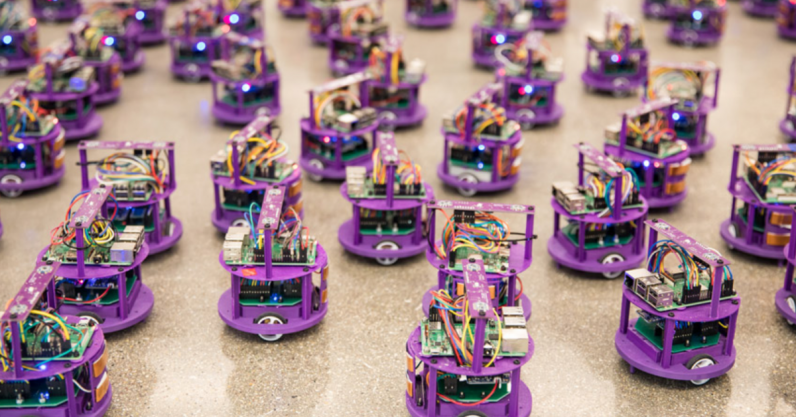
New algorithm for self-driving vehicles has a bold ‘collision-free guarantee’


Researchers have developed an algorithm that could stop self-driving vehicles from getting in crashes and traffic jams. The team from Northwestern University (NU) claims their invention is “the first decentralized algorithm with a collision-free, deadlock-free guarantee.” The algorithm divides the ground beneath the machines into a grid. The robots learn their position through technology similar to GPS and coordinate their movements through sensors that assess where there’s free space to move. “The robots refuse to move to a spot until that spot is free and until they know that no other robots are moving to that same spot,” said Northwestern…

This story continues at The Next Web

from The Next Web https://ift.tt/2HVgpCc

Comments

Popular posts from this blog

TNW Podcast: Boris comes over to co-host; Slack’s Cal Henderson talks European tech

 Welcome to the new episode of the TNW Podcast — the show where we discuss the latest developments in the European technology ecosystem and feature interviews with some of the most interesting people in the industry. In today’s episode, Andrii is joined by Boris Veldhuijzen van Zanten, co-founder, member of the board, and former CEO of TNW. The topics discussed include the jobs created by Dutch startups, giant state funding for energy projects, translations of the word ‘computer’, and a bunch of other things in between. In the interview section, we’re featuring a conversation with Cal Henderson, co-founder and… This story continues at The Next Web from The Next Web https://ift.tt/jUgcNFD

2024’s most important travel tech trends

Guest post by Singapore Tourism Board As the tourism industry continues its post-pandemic recovery in an increasingly uncertain travel market, a question that has dawned upon us is — what’s next? Naturally, many of us are looking towards technology for more opportunities. In 2023, we saw the generative AI boom and further growth of emerging technologies like extended reality (XR) and 5G. While these advances are already shaping the travel sector, there is much more to come as more use cases emerge while the technology further matures. Looking forward into 2024, we can expect teams to do more with less, streamline their… This story continues at The Next Web from The Next Web https://ift.tt/seCScOH

Shhhh, they’re listening – inside the coming voice-profiling revolution

You decide to call a store that sells some hiking boots you’re thinking of buying. As you dial in, the computer of an artificial intelligence company hired by the store is activated. It retrieves its analysis of the speaking style you used when you phoned other companies the software firm services. The computer has concluded you are “friendly and talkative.” Using predictive routing, it connects you to a customer service agent who company research has identified as being especially good at getting friendly and talkative customers to buy more expensive versions of the goods they’re considering. This hypothetical situation may… This story continues at The Next Web from The Next Web https://ift.tt/3xxikp3