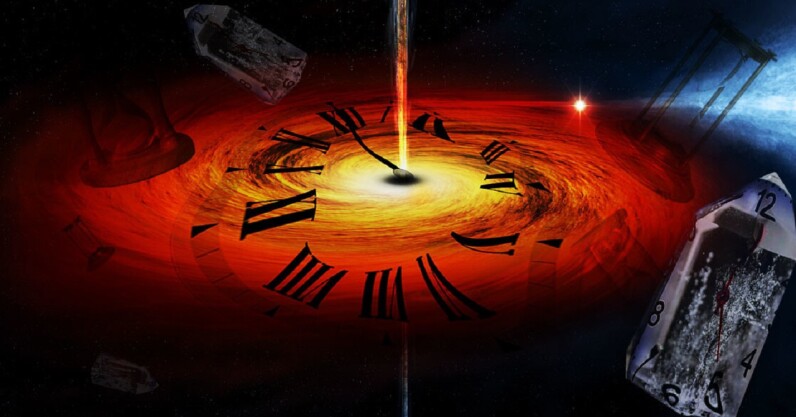
Wild new theory says the Big Bang wasn’t the beginning


The prevailing theory on the origin of our universe goes like this: about 13.7 billion years ago a single particle exploded. The resultant blast created an ever-expanding universe that, eventually, became home to the planet we call Earth. The Big Bang theory first appeared in a scientific paper in 1931. Physicist Georges Lemaitre is credited with its creation. And the bulk of our assumptions about the universe and its rate of expansion are based on his ideas. In 2019 that rate of expansion, called the Hubble Constant, was put into question by various teams that determined either the rate of…

This story continues at The Next Web

from The Next Web https://ift.tt/3x9KjKX

Comments

Popular posts from this blog

TNW Podcast: Boris comes over to co-host; Slack’s Cal Henderson talks European tech

 Welcome to the new episode of the TNW Podcast — the show where we discuss the latest developments in the European technology ecosystem and feature interviews with some of the most interesting people in the industry. In today’s episode, Andrii is joined by Boris Veldhuijzen van Zanten, co-founder, member of the board, and former CEO of TNW. The topics discussed include the jobs created by Dutch startups, giant state funding for energy projects, translations of the word ‘computer’, and a bunch of other things in between. In the interview section, we’re featuring a conversation with Cal Henderson, co-founder and… This story continues at The Next Web from The Next Web https://ift.tt/jUgcNFD

Google’s ‘time crystals’ could be the greatest scientific achievement of our lifetimes

Eureka! A research team featuring dozens of scientists working in partnership with Google‘s quantum computing labs may have created the world’s first time crystal inside a quantum computer. This is the kind of news that makes me want to jump up and do a happy dance. These scientists may have produced an entirely new phase of matter. I’m going to do my best to explain what that means and why I personally believe this is the most important scientific breakthrough in our lifetimes. However, for the sake of clarity, there’s two points I need to make first: Time crystals are a… This story continues at The Next Web Or just read more coverage about: Google from The Next Web https://ift.tt/3fdRQlg

It’s never too late to learn Adobe Photoshop, Logic Pro, and more during this sale

The old proverb, "You can't teach an old dog new tricks," couldn't be far from the truth. Technology has come a long way in changing the classic classroom experience. People now have the ability to pretty much learn any type of skill from just about any where at their own pace. from The Next Web http://bit.ly/2Wmq11T