Google’s new app automagically organizes your scanned documents


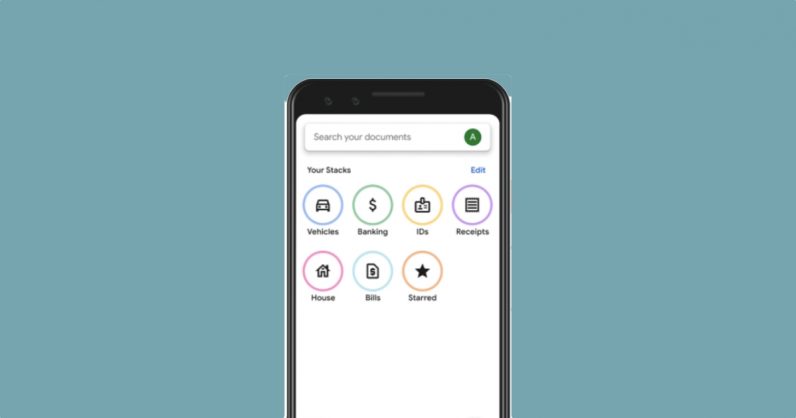
There are plenty of apps to scan documents: Google Lens, Microsoft Lens, and the good old camera. But once you’ve taken a scan, it might be difficult to find it in a few weeks’ time. Google’s Area 120 team has launched an Android app called Stack to solve this problem. The app lets you scan documents and then it uses AI to automatically name and sort them into different categories such as bills, IDs, and vehicles. The Area 120 team has worked with Google Clouds‘ DocAI team to develop a machine-learning algorithm to identify important parts of a document, such as due…

This story continues at The Next Web

Or just read more coverage about: Google

from The Next Web https://ift.tt/3ue5utD

Comments

Popular posts from this blog

TNW Podcast: Boris comes over to co-host; Slack’s Cal Henderson talks European tech

 Welcome to the new episode of the TNW Podcast — the show where we discuss the latest developments in the European technology ecosystem and feature interviews with some of the most interesting people in the industry. In today’s episode, Andrii is joined by Boris Veldhuijzen van Zanten, co-founder, member of the board, and former CEO of TNW. The topics discussed include the jobs created by Dutch startups, giant state funding for energy projects, translations of the word ‘computer’, and a bunch of other things in between. In the interview section, we’re featuring a conversation with Cal Henderson, co-founder and… This story continues at The Next Web from The Next Web https://ift.tt/jUgcNFD

2024’s most important travel tech trends

Guest post by Singapore Tourism Board As the tourism industry continues its post-pandemic recovery in an increasingly uncertain travel market, a question that has dawned upon us is — what’s next? Naturally, many of us are looking towards technology for more opportunities. In 2023, we saw the generative AI boom and further growth of emerging technologies like extended reality (XR) and 5G. While these advances are already shaping the travel sector, there is much more to come as more use cases emerge while the technology further matures. Looking forward into 2024, we can expect teams to do more with less, streamline their… This story continues at The Next Web from The Next Web https://ift.tt/seCScOH

How to design human-machine interfaces for vehicles of the future 

A human-machine interface (HMI) is an interface that allows us to interact with a digital system. No matter what HMI we design, we need to enable users to take advantage of all that a system offers.  For almost two decades, the personal computer was the first thing that came to mind when we heard about digital HMI. But the situation changed, and today HMI is an integral part of many devices we use daily — mobile phones, smartwatches, IoT devices, and even cars. Car HMI design is a relatively new field with specific challenges. My team has experience designing for… This story continues at The Next Web from The Next Web https://ift.tt/3m7s0m6